Last updated on 05 Sep, 2026
Comprehensive Travel Insurance: Coverage, Benefits & How to Choose
Travel insurance can protect you from unexpected financial losses and emergencies during a trip. However, not every travel insurance policy provides the same level of protection.
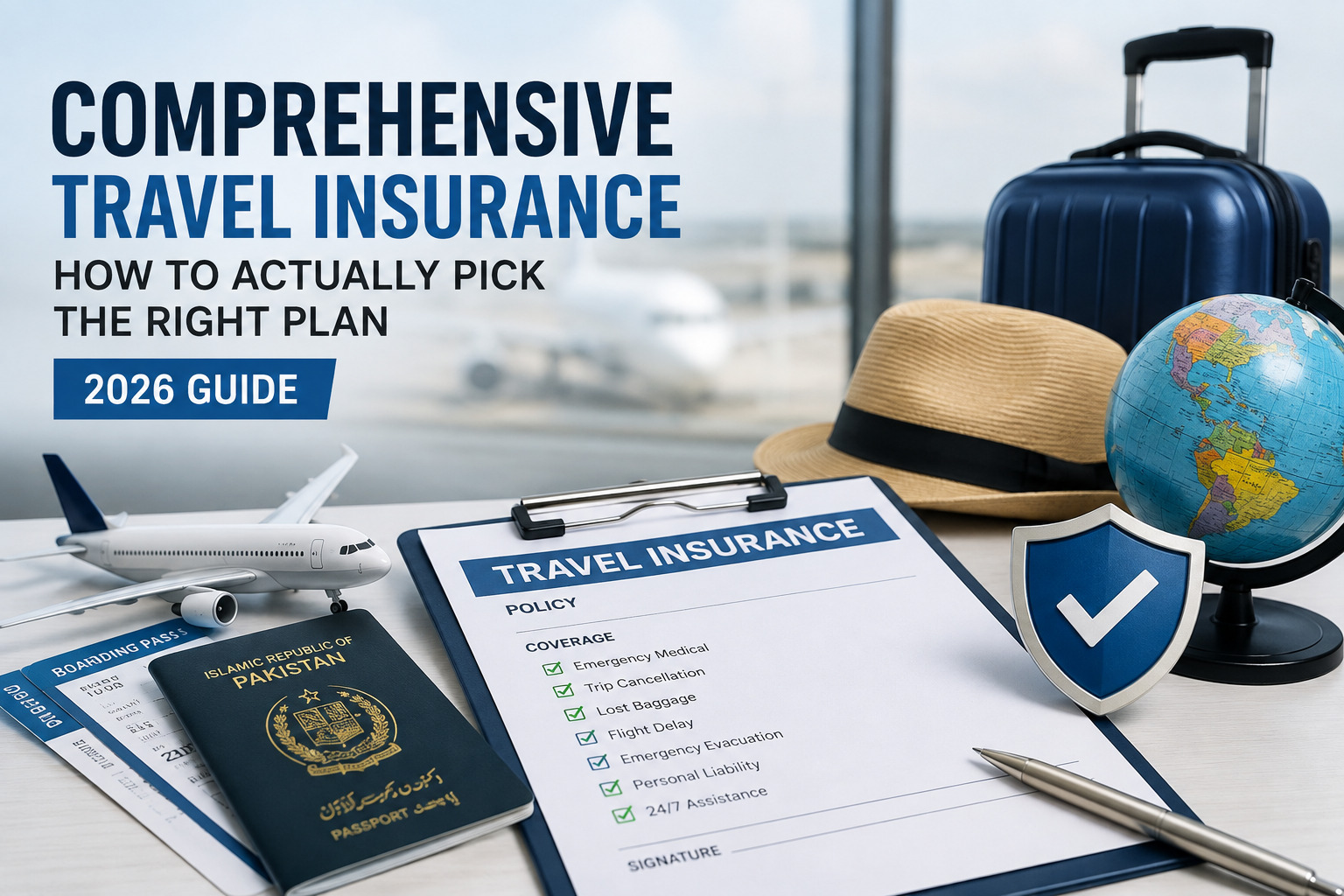
Comprehensive travel insurance generally combines several important travel protections in one policy. Depending on the insurer and plan, this can include emergency medical expenses, hospitalization, medical evacuation, repatriation, baggage-related problems, trip cancellation, trip interruption, travel delays and emergency assistance.
For travelers from Pakistan, choosing comprehensive travel insurance means looking beyond the premium and checking whether the policy provides suitable protection for the destination, duration and purpose of the journey.
This guide explains what comprehensive travel insurance means, what it may cover, what exclusions to check and how to choose suitable coverage before travelling.
What Is Comprehensive Travel Insurance?
Quick Answer:
Comprehensive travel insurance is a travel insurance policy designed to provide broader protection across multiple travel risks rather than covering only one specific situation.
Depending on the policy, comprehensive coverage may include:
- Emergency medical treatment
- Hospitalization
- Emergency medical evacuation
- Repatriation
- Baggage loss or delay
- Trip cancellation
- Trip interruption
- Travel delays
- Personal accident benefits
- Emergency assistance
The exact benefits, limits, exclusions and conditions depend on the insurance provider and individual policy.
Therefore, “comprehensive” does not mean everything is automatically covered. Travelers should always read the policy wording and understand the applicable exclusions and limits.
What Does Comprehensive Travel Insurance Cover?
The biggest advantage of comprehensive travel insurance is that it can bring several forms of travel protection together under one policy.
The coverage available depends on the plan, but the following benefits are commonly associated with comprehensive travel insurance.
1. Emergency Medical Expenses
Medical emergencies are one of the most important reasons to consider travel insurance.
A covered policy may help with eligible emergency medical expenses incurred during a trip, such as:
- Emergency doctor treatment
- Hospitalization
- Emergency medicines
- Diagnostic tests related to an eligible emergency
- Ambulance services
- Necessary emergency treatment
Medical benefits are normally subject to a maximum coverage limit and policy conditions.
Before purchasing a policy, check the actual medical coverage amount, rather than judging the policy only by its premium.
2. Hospitalization During Travel
Unexpected hospitalization abroad can become financially stressful, particularly in countries where medical treatment is expensive.
Depending on the policy, comprehensive travel insurance may provide coverage for eligible hospitalization resulting from an insured medical emergency.
Check:
- Hospital treatment limits
- Eligible medical expenses
- Deductibles or excess
- Exclusions
- Documentation requirements
Understanding these details before travelling can make the claims process easier if an emergency occurs.
3. Emergency Medical Evacuation
A serious medical emergency may require transportation to a suitable medical facility.
Where included, emergency medical evacuation can provide financial protection for eligible transportation or evacuation arrangements when medically necessary.
This benefit can be particularly relevant when:
- Appropriate treatment is not available nearby
- A traveler needs specialized medical care
- Local transportation is medically necessary
The policy should be checked for evacuation limits, conditions and authorization requirements.
4. Repatriation Benefits
Some comprehensive travel insurance policies include repatriation-related benefits in specific circumstances.
Repatriation may involve arrangements associated with returning an insured traveler to their home country when covered by the policy.
The circumstances in which repatriation applies can vary between policies.
Therefore, travelers should review the relevant policy section rather than assuming repatriation is unlimited.
5. Baggage Loss, Theft or Delay
Travel problems are not always medical.
Baggage can be lost, delayed, stolen or damaged during a journey.
Depending on the plan, comprehensive travel insurance may provide benefits for eligible baggage-related incidents.
Possible benefits may include:
- Lost baggage
- Stolen baggage
- Damaged baggage
- Delayed baggage
- Certain personal belongings
However, baggage protection normally comes with specific limits.
Some valuable items may also have separate sub-limits or conditions.
Keep receipts and other relevant documents for valuable belongings where required by the policy.
6. Trip Cancellation
Some comprehensive travel insurance policies provide trip cancellation protection for specific covered reasons.
If a qualifying insured event prevents you from taking your trip, the policy may reimburse eligible prepaid and non-refundable expenses according to its terms.
Before relying on cancellation coverage, check:
- Covered cancellation reasons
- Maximum reimbursement
- Eligible expenses
- Required documentation
- Applicable exclusions
Not every reason for cancelling a trip will necessarily qualify for reimbursement.
7. Trip Interruption
Sometimes a traveler has already started a journey but must return home or change their travel plans because of a covered event.
Where included, trip interruption coverage may help with eligible expenses or unused prepaid travel costs, depending on the policy.
The reason for the interruption must normally fall within the policy's covered circumstances.
8. Travel Delay
Flights and other travel arrangements can sometimes be delayed.
Some comprehensive travel insurance policies provide benefits when a covered delay exceeds the required waiting period.
Depending on the plan, eligible benefits may include expenses related to:
- Meals
- Accommodation
- Necessary additional travel expenses
Always check the minimum delay period and maximum benefit before purchasing.
9. Personal Accident Protection
Certain comprehensive policies also provide personal accident benefits for covered accidental events during the insured journey.
The amount and circumstances of the benefit depend on the policy.
Do not assume that every travel insurance plan provides identical accident protection.
Comprehensive Travel Insurance vs Limited Travel Cover
The word comprehensive generally refers to the broader range of protections available under a policy.
A policy with limited benefits may focus mainly on a particular type of travel risk, while a comprehensive policy may combine medical and non-medical travel protections.
| Protection |
Limited Travel Cover |
Comprehensive Travel Insurance |
| Emergency medical treatment |
May be included |
Commonly included |
| Hospitalization |
Depends on policy |
Commonly included |
| Medical evacuation |
Depends on policy |
May be included |
| Repatriation |
Depends on policy |
May be included |
| Baggage protection |
May be limited |
May be included |
| Trip cancellation |
Depends on policy |
May be included |
| Trip interruption |
Depends on policy |
May be included |
| Travel delay |
Depends on policy |
May be included |
| Emergency assistance |
Depends on provider |
May be available |
| Overall protection |
More limited |
Broader |
Important: this is a general explanation. Actual coverage depends on the policy wording.
Who Should Consider Comprehensive Travel Insurance?
Comprehensive travel insurance may be suitable for travelers who want broader protection against different types of travel problems.
It can be particularly useful if you:
- Are travelling internationally
- Have expensive prepaid bookings
- Are visiting a destination with high healthcare costs
- Are travelling with family
- Have a longer journey
- Have multiple flights or travel arrangements
- Want both medical and non-medical protection
- Want access to emergency assistance while abroad
However, comprehensive coverage is not automatically necessary for every traveler.
The right policy depends on your destination, travel plans and the level of protection you need.
Comprehensive Travel Insurance for Travelers from Pakistan
If you are travelling abroad from Pakistan, consider your complete journey before selecting a policy.
Important factors include:
- Destination
- Travel dates
- Trip duration
- Purpose of travel
- Visa requirements
- Medical coverage
- Emergency evacuation
- Repatriation
- Baggage benefits
- Cancellation benefits
- Policy exclusions
- Deductible or excess
- Claims procedure
- Emergency assistance
The premium is important, but it should not be the only factor.
A lower-priced policy may not provide the same benefits, limits or conditions as another policy.
For current pricing information, you can read our dedicated travel insurance price in Pakistan guide.
For understanding how to evaluate different options, visit our travel insurance comparison guide.
Comprehensive Travel Insurance for Schengen Travel
Travelers applying for a Schengen visa need to pay close attention to the insurance requirements applicable to their application.
A suitable policy may need to satisfy specific requirements relating to medical coverage, geographical validity and the travel period.
Before purchasing, confirm:
- Required medical coverage
- Policy validity
- Geographical coverage
- Emergency medical treatment
- Repatriation requirements
- Applicable visa conditions
Do not rely solely on the word “comprehensive.”
The actual policy must satisfy the requirements applicable to your visa application.
You can also review our dedicated Schengen travel insurance information for more destination-specific guidance.
Comprehensive Travel Insurance for International Travel
International trips can involve multiple risks, particularly when travelling far from home.
Comprehensive travel insurance may provide protection for both medical and travel-related emergencies during an international journey.
Depending on your policy, this can include:
- Emergency medical treatment
- Hospitalization
- Evacuation
- Repatriation
- Baggage protection
- Travel delays
- Cancellation
- Trip interruption
- Emergency assistance
The level of protection required can vary significantly depending on the destination.
For broader destination-related information, see our international travel insurance guide.
How Much Medical Coverage Should You Have?
There is no single medical coverage amount that is ideal for every traveler.
The appropriate level can depend on:
- Destination
- Healthcare costs
- Visa requirements
- Trip duration
- Age
- Travel purpose
- Existing medical circumstances
For destinations where medical treatment can be expensive, travelers should pay particular attention to the maximum medical benefit.
Also check whether hospitalization, emergency treatment, evacuation and repatriation are separately limited.
A higher medical limit can be useful, but the highest number is not automatically the best policy.
The conditions attached to the coverage matter too.
Does Comprehensive Travel Insurance Cover Pre-Existing Conditions?
Not necessarily.
Pre-existing medical conditions may be excluded, restricted or covered only under specific conditions.
If you have an existing medical condition, do not assume that comprehensive travel insurance automatically covers treatment related to that condition.

Before purchasing:
- Disclose relevant information as required.
- Ask the insurer about the condition.
- Check the exclusions.
- Review any special conditions or additional requirements.
This can help avoid misunderstandings during a claim.
What Is Usually Excluded?
Comprehensive travel insurance does not mean unlimited protection.
Policies can contain exclusions relating to situations such as:
- Pre-existing medical conditions
- Routine medical treatment
- Planned treatment
- Certain high-risk activities
- Alcohol- or drug-related incidents
- Unattended baggage
- Certain valuable items
- Intentional acts
- Policy violations
- Certain war-related events
- Claims without required documentation
Exclusions vary between policies.
Always read the exclusions and conditions before purchasing.
Comprehensive Travel Insurance: What to Check Before Buying
Before selecting a policy, review these areas carefully.
Medical Coverage
Check the maximum medical benefit and eligible expenses.
Emergency Evacuation
Understand whether emergency evacuation is included and what conditions apply.
Repatriation
Check the circumstances in which repatriation benefits apply.
Baggage
Look at the overall baggage limit as well as item-specific limits.
Cancellation
Understand which cancellation reasons qualify for a claim.
Interruption
Check what happens if you need to cut your journey short.
Travel Delay
Review the minimum delay period and maximum benefit.
Deductible
A deductible or excess can affect the amount payable on an eligible claim.
Exclusions
Read the exclusions carefully instead of relying on the policy name.
Assistance
Check how emergency assistance can be contacted while abroad.
How to Choose Comprehensive Travel Insurance
Use this simple process before buying.
Step 1: Identify Your Destination
Start with your destination because insurance and visa requirements can vary.
Step 2: Determine Your Trip Duration
Make sure your insurance period covers the required journey.
Step 3: Check Medical Protection
Review the medical limit and covered emergency expenses.
Step 4: Review Evacuation and Repatriation
These benefits can become important during serious medical emergencies.
Step 5: Review Non-Medical Benefits
Check baggage, cancellation, interruption and travel delay protection if these are important to your trip.
Step 6: Read Exclusions
Understand what the policy does not cover.
Step 7: Check the Deductible
Know how the deductible or excess works before making a claim.
Step 8: Check Visa Requirements
If insurance is required for your visa, make sure the policy satisfies the applicable requirements.
Step 9: Review the Premium
Only after checking the actual coverage should you consider the price.
Is Comprehensive Travel Insurance Worth It?
For travelers who want broader protection, comprehensive travel insurance can be useful because multiple travel risks may be covered under one policy.
However, the word “comprehensive” should not be the only reason you choose a plan.
A suitable policy should have:
- Appropriate medical protection
- Relevant travel benefits
- Suitable coverage limits
- Understandable exclusions
- Appropriate destination coverage
- Conditions that fit your journey
The objective should not simply be finding the cheapest insurance.
The objective is finding appropriate protection for your specific trip.
Can You Buy Comprehensive Travel Insurance Online From Pakistan?
Travelers can apply for available travel insurance options online through insurers and authorized channels, subject to the provider's application and verification process.
You may need information such as:
- Passport details
- Travel destination
- Travel dates
- Traveler details
- Visa information where applicable
- Contact information
Before completing the purchase, carefully check:
- Name spelling
- Passport information
- Travel dates
- Destination
- Coverage period
- Selected benefits
Incorrect information can create problems later, so review your policy documents carefully.
What to Do If You Have a Medical Emergency Abroad
If you experience a serious medical emergency during your trip:
1. Get Appropriate Medical Help
Seek emergency medical assistance when required.
2. Contact the Insurance Assistance Service
Use the emergency contact information provided with your policy.
3. Keep Your Documents
Keep medical reports, invoices, prescriptions and other relevant documents.
4. Follow the Claims Procedure
Submit the required documents according to the insurer's claims process.
5. Keep Copies
Maintain copies of important documents submitted for your claim.
The exact procedure varies between insurance providers.
Comprehensive Travel Insurance Checklist
Before purchasing, ask yourself:
- Does the policy cover my destination?
- Does it cover my complete travel period?
- Does it meet my visa requirements?
- What is the maximum medical coverage?
- Is hospitalization covered?
- Is emergency evacuation included?
- Is repatriation included?
- What baggage protection is available?
- Is trip cancellation included?
- Is trip interruption included?
- Are travel delays covered?
- What are the major exclusions?
- Is there a deductible?
- How can I contact emergency assistance?
- What documents are needed for a claim?
If you can answer these questions, you can make a more informed decision.
Common Mistakes When Buying Comprehensive Travel Insurance
Choosing Only by Price
The cheapest policy may not provide the protection you actually need.
Ignoring Exclusions
A benefit listed on the policy does not mean every related situation is covered.
Not Checking Medical Limits
A policy may have medical coverage, but the limit may not be suitable for your destination.
Assuming Pre-Existing Conditions Are Covered
Always confirm this specifically.
Ignoring Visa Requirements
If insurance is required for your visa, verify the applicable requirements before purchasing.
Buying Too Late
Some benefits, particularly cancellation-related protection, can depend on when the policy is purchased.
Entering Incorrect Information
Incorrect passport or travel information can cause avoidable problems.
Comprehensive Travel Insurance for Families
Families travelling together may want broader protection because several travelers can be affected by the same travel disruption.
Depending on the policy, family travel insurance may provide benefits for:
- Emergency medical treatment
- Hospitalization
- Baggage
- Travel delays
- Cancellation
- Trip interruption
- Emergency assistance
Family eligibility, age limits and coverage conditions vary between policies.
Check the policy details for every insured traveler before purchasing.
Comprehensive Travel Insurance for International Students
Students travelling abroad for education may have different insurance needs from short-term tourists.
Depending on the destination and institution, students may need to consider:
- Longer coverage periods
- Medical protection
- Emergency assistance
- Repatriation
- Visa or university requirements
- Coverage duration
Students should check their university or visa requirements before purchasing a policy.
For student-specific pricing and information, see our student travel insurance guide.
Frequently Asked Questions
What is comprehensive travel insurance?
Comprehensive travel insurance is a policy designed to provide broader protection across multiple travel risks, which may include emergency medical expenses, hospitalization, evacuation, repatriation, baggage, cancellation, interruption and travel delays.
What does comprehensive travel insurance cover?
Depending on the policy, it may cover emergency medical treatment, hospitalization, evacuation, repatriation, baggage-related incidents, trip cancellation, trip interruption, travel delays and emergency assistance.
Is comprehensive travel insurance better than basic travel insurance?
Comprehensive insurance generally offers broader protection, but whether it is suitable depends on your destination, trip and individual coverage needs.
Does comprehensive travel insurance cover medical emergencies?
Many comprehensive travel insurance policies include emergency medical coverage, subject to the policy limits, exclusions and conditions.
Does comprehensive travel insurance cover hospitalization?
Hospitalization resulting from an eligible medical emergency may be covered under many policies, subject to the applicable terms and limits.
Does comprehensive travel insurance cover baggage?
Many comprehensive policies include baggage protection, but limits, exclusions and item-specific conditions vary.
Does comprehensive travel insurance cover trip cancellation?
Some comprehensive policies include cancellation protection for specified covered reasons. The policy wording should be checked before purchasing.
Does comprehensive travel insurance cover pre-existing conditions?
Not necessarily. Pre-existing medical conditions may be excluded or subject to specific conditions. Travelers should confirm this with the insurer before purchasing.
Is comprehensive travel insurance required for a Schengen visa?
Travel insurance is part of the requirements for Schengen visa applications. The policy must satisfy the applicable requirements for the specific visa application.
Can I buy comprehensive travel insurance online from Pakistan?
Travelers can apply for available travel insurance options online through insurers and authorized channels, subject to the provider's application process.
How do I choose comprehensive travel insurance?
Start with your destination and travel dates, then check medical coverage, evacuation, repatriation, baggage, cancellation, exclusions, deductibles and assistance before considering the premium.
Final Thoughts
Comprehensive travel insurance can provide broader protection against the unexpected problems that may occur during an international journey.
Instead of choosing a policy simply because it has a low premium or uses the word “comprehensive,” look at the actual coverage, limits, exclusions and conditions.
For travelers from Pakistan, the right policy should match the destination, travel period, visa requirements and personal travel needs.
Take time to understand the policy before travelling so you know what protection you have if something unexpected happens.
Review your coverage, choose suitable protection and get your travel insurance arranged before your journey.